Automating quote creation: how insurance brokers handle quote requests with AI
Quote creation is the biggest time sink in the brokerage. Here's how insurance brokers automate quote requests with AI, what changes step by step, and where the broker still decides.
By Daniel D.
Modus
Last updated: Jul 27, 2026
News & InsightsA request comes in. A commercial client needs a quote for their public-liability cover, sends over a few key details and asks for a quick response. For the broker, this is where the real work begins. Gather the data, check the management system, compare coverages, calculate, draft a cover letter, document the case. By the time the quote reaches the client, hours have often passed, sometimes days.
That makes quote creation one of the biggest time sinks in the brokerage. It's also one of the cases where automation pays off fastest. This article shows how insurance brokers handle quote requests with AI, what concretely changes, and what to watch out for so the quality holds up.
In short: quote requests can be automated by having the software recognise the request as a case, bring together the client context and the necessary data, and prepare a draft quote or reply. The broker reviews, adds the individual calculation and sends. A process of hours becomes a case of minutes.
Why quote creation eats up so much time in the brokerage
In most sales conversations, quote creation is the first pain point mentioned. The reason lies in the structure of the case. A quote comes out of many small steps that are unremarkable individually and, together, cost half a day.
First, the request has to be understood at all. Which line of business is it about, what coverage is needed, what details are still missing. Then comes the search for context. Is the client already in the portfolio, which policies are running, were there previous claims. This information rarely sits in one place. It's tucked away in emails, in the management system and in old notes.
Only then does the actual professional work begin: compare coverages, calculate premiums, present the quote clearly. At the end comes the documentation, so the case stays traceable.
On top of that: the request itself is only the start of a multi-stage process. A typical quote creation runs through six stations:
1. Receive and understand the request 2. Collect risk data from the client, often across several follow-ups 3. Obtain quotes from insurers, again with queries in both directions 4. Compare incoming quotes 5. Prepare the result for the client 6. Present the quote and follow up
Between almost all stations there are waiting times and loops. The case drags on over days, and at every response someone has to rebuild the context: what was requested, which risk data is still missing, which insurer has already replied. This coordination between client and insurers often costs more time than the professional work itself.
Every one of these steps is necessary. None of them creates value on its own. And with every new client this effort scales linearly, while the available time stays the same. That's exactly what makes quote creation a structural bottleneck.
A short example makes it tangible. Suppose an office handles 15 quote requests a week, and each takes 30 to 45 minutes to prepare. That's eight to eleven hours a week going purely into gathering, drafting and documenting, before any advising happens at all. On top of that comes the hidden cost of every interruption. Every switch between inbox, management system and comparison tool costs not just the pure handling time but also the time to get back into the case. This time is missing elsewhere, precisely where revenue is generated.
How do I automate quote requests as an insurance broker?
Automation here means, above all, taking the preparatory steps off the broker's plate. The broker steps in where their professional judgment counts: with coverage, calculation and advice. In five steps it looks like this.
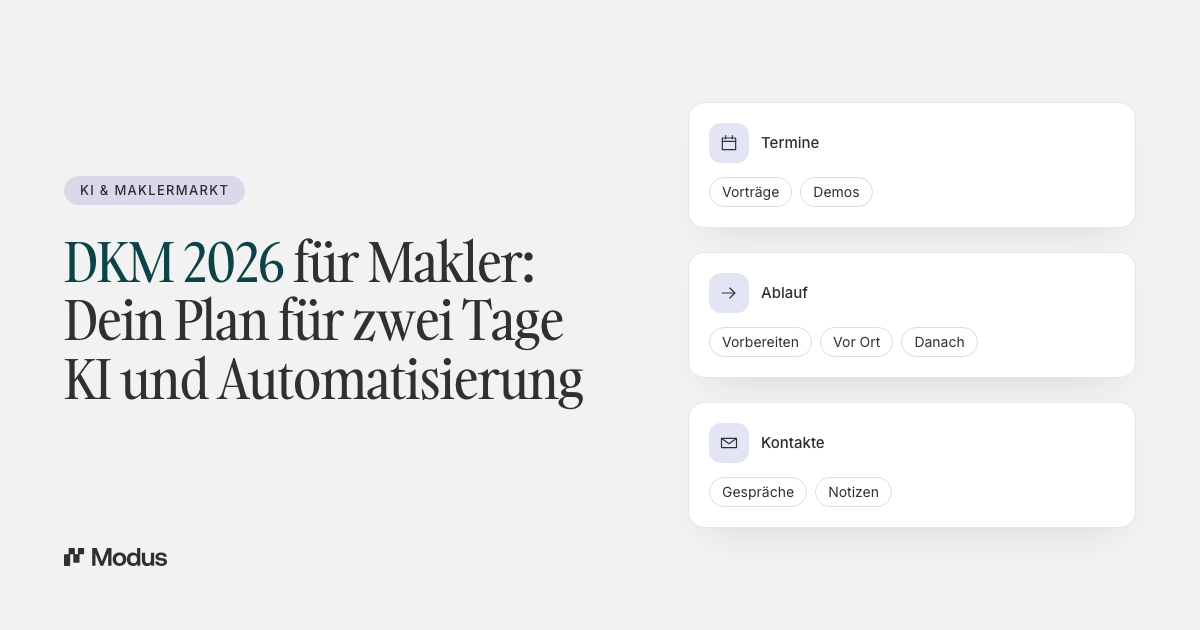
1. The request is recognised and assigned automatically. The incoming message is classified as a quote request and assigned to the right client. The message becomes a structured case with an owner and priority.
2. Context and data are brought together. The software pulls in the existing client context, links related cases and gathers the relevant information in one place. The manual searching falls away.
3. A draft is prepared. Based on the request and the client context, a draft reply or quote is created. For standardised cases, an in-house rate calculator with application and completion journeys can trigger the right journey directly.
4. The broker reviews, calculates and sends. The draft is the starting point for the professional review. The broker checks the coverage, adds the individual calculation, adjusts the wording and sends directly from the case.
5. The case is documented. Every step lands automatically on a timeline. The case stays traceable, for colleagues too and for later queries.
The loops in between stay within the same case. In practice, a quote is rarely finished in a single pass: risk data has to be requested from the client, quotes obtained from insurers and their queries answered. It's exactly these intermediate steps that normally get lost in the inbox. In a structured case they stay together. The query to the client is prepared as a draft, the pending insurer response sits as a follow-up reminder in the case, and incoming quotes are automatically assigned to the case and summarised. The broker compares, prepares and presents to the client, without having to pick up the thread from scratch each time.
The difference from a general AI assistant lies in steps one and two. An assistant can draft a text if you copy everything into it. An operational layer recognises the case itself and brings the context with it. More on that in "The difference between an AI feature and AI infrastructure".
One case, before and after
Professional responsibility stays entirely with the broker. What changes is the role. "Build the work yourself" turns into "review and sign off the prepared work". This shift in role is the real lever, because it moves scarce time from routine to judgment.
| Step | Traditional | With an operational AI layer |
|---|---|---|
| Understand and assign the request | read manually and search in the BMS | automatically classified and assigned |
| Gather risk data | formulate follow-up questions one by one and track them | follow-up drafts prepared, open items flagged |
| Collect context | from email, BMS and notes | brought together in one place |
| Obtain quotes from insurers | scattered across the inbox, tracked in your head | as follow-ups on the case, responses assigned automatically |
| Create the draft | written from scratch | prepared draft |
| Calculation and review | Broker | Broker |
| Documentation | tracked manually | automatically on the timeline |
An example from practice
Take the public-liability request mentioned at the start. Classically it runs like this: the employee reads the email, searches for the client in the management system, checks existing policies, follows up on missing details, compares suitable coverages, calculates and drafts a cover letter. Along the way they switch repeatedly between inbox, management system and comparison tool. By the time everything is together, a good half hour has passed, often spread across several interruptions in the day.
With an operational AI layer, the same case looks different. The request is recognised as a quote case and assigned to the client. The existing context, current policies and earlier requests, is right there. A draft with the fitting key points is ready. The employee reviews the coverage, adds the calculation and sends. Half an hour of small tasks becomes a few minutes of focused review. The time gained flows into the next client conversation.
Which quote cases are best to start with
Not every quote can be automated to the same degree. The degree of automation rises with the degree of standardisation.
Well suited are standardised commercial lines such as public liability, contents insurance or commercial legal expenses, as well as clearly structured personal lines such as household contents, personal liability or motor. Here the quotes follow a fixed pattern, and the necessary details are manageable.
Also suitable are recurring cases such as renewal quotes in the portfolio. The context is already there, and the update follows a clear logic.
Less suitable for full preparation are complex industrial and specialist risks with individual tenders. Here too, automation helps with the preparation, but the actual design work remains advisory work.
A sensible start therefore begins with a frequent, clearly structured type of quote and expands from there.
What concretely changes with AI
Faster response. Whoever presents a quote within minutes instead of days wins in the competition. In commercial business especially, response time often decides the deal.
Higher conversion probability. A client who quickly receives a clean quote is less likely to walk away. Speed is a competitive advantage in its own right in sales.
Fewer media breaks. When email, management system and case run in sync, duplicate data entry falls away. That lowers the error rate and saves the time otherwise spent on rework.
Context available instantly. The client history and related cases are visible in one place. No one has to reconstruct the connection from old threads.
More capacity per employee. The same people handle more requests, because the preparation is done. That feeds directly into revenue per employee, the metric modern brokerages are measured against. Details in "Revenue per employee: the north star brokerages should be measured against".
What changes for your team
Automated quote creation changes not just one case but the way the office works.
The role within the team shifts from executing to reviewing. Employees no longer build quotes from scratch but check and refine a prepared version. That makes the work more demanding and less monotonous.
New employees are onboarded faster. Because cases are laid out in a structured way and the context is visible, less knowledge hangs on individual heads. The classic bottleneck, where every decision runs through the owner, gets smaller.
Quality stays more consistent, even as the office grows. A structured case sets the same frame for every employee. That way not only the volume scales but also the reliability.
What matters in automation
Structure before automation. An automated quote is only as good as the data and processes behind it. Anyone who automates on an unclean basis mostly speeds up errors. Why that's especially critical in insurance is covered in "Why automation without structure is dangerous in insurance".
The human decides. Scope of coverage and calculation belong in the broker's hands. The AI prepares and proposes; the professional decision stays with the human. That's also the clean path from a liability standpoint.
GDPR and traceability. Client data belongs only in a solution with a data-processing agreement and processing in the EU. Every automated step should stay documented, so the case can be audited.
Where automation has its limits
Standardised and recurring quotes can be prepared to a large extent. A complex industrial risk with an individual tender, by contrast, still needs the broker's experience and judgment. The sensible division is clear. The AI takes over the preparation and the routine; the human takes over advice, calculation and decision. That way the quality is preserved while the speed rises.
Common mistakes in quote automation
Three patterns lead to automation delivering less than it could.
Automating only the text. Whoever speeds up only the drafting but handles the rest by hand merely shifts the bottleneck. The biggest lever lies in automatically recognising and assigning the request.
Starting on an unclean data basis. When client data is incomplete or scattered, automation carries those gaps into every quote. Structure comes first.
Taking the human out of the loop. Sending out coverage and calculation without professional review is risky. The broker's sign-off remains a fixed part of the case.
How to get started
First: choose the right case type. Start with a type of quote that occurs frequently and is clearly structured, such as a standard commercial line.
Second: map the case completely. From the request through the risk-data and insurer loops to the presented quote, including context and documentation. A half-automated process saves little.
Third: expand. Once the first case type is running, the next ones follow. That way the impact grows step by step.
Which software architecture actually supports this approach is shown in "Management system with AI: which architecture truly supports your business".
Frequently asked questions
Can AI create quotes for insurance brokers?
AI can recognise quote requests, bring the context together and prepare a draft. The final calculation and the decision about coverage stay with the broker. In this combination, AI speeds up quote creation considerably without shifting professional responsibility.
How long does quote creation take with AI?
For standardised cases, the path from request to a ready-to-send draft shortens from hours to minutes. The exact figure depends on the line of business and the degree of standardisation.
Does the AI replace the broker on the calculation?
No. The AI prepares and proposes. The calculation, the coverage decision and the advice stay with the broker. That's the right path professionally and in terms of liability.
How does quote automation integrate with my existing management system?
A good solution sits as a layer over the management system and doesn't replace it. Email, management system and case run in sync, and the management system stays the system of record. That way there's no system change and no duplicate data entry.
Do I need my own technical know-how to introduce it?
No. The setup is handled by the vendor together with you. More important than technical knowledge is the willingness to describe one case type cleanly, so the automation fits the business from day one.
How do I ensure the quality of the quotes?
By keeping the professional sign-off a fixed part of the case. The AI prepares, the broker reviews coverage and calculation. The documented timeline ensures that every step is traceable.
Is automated quote creation GDPR-compliant?
It can be, if a data-processing agreement is in place, the data is processed in the EU, and the vendor doesn't use your data for training. From 2 August 2026, the EU AI Act's transparency obligation also applies in client-facing contact.
Which lines of business is automation suited to?
Most of all to standardised and recurring quotes, for example in common commercial and personal lines. Complex individual risks benefit from the preparation but still need the broker's personal touch.
Conclusion
Quote creation is the case where the benefit of an operational AI layer shows up fastest. It's frequent, it's time-intensive, and it follows a clear pattern. For many offices it's therefore the most pragmatic entry point into automation, because it starts with a clearly defined, daily recurring case and brings quick, visible results.
Whoever automates the preparation and lets the broker step in where their judgment counts shortens the response time and gains capacity for advice and sales. That's exactly what Modus is built for as an AI-native operating system on top of the management system. It turns an incoming request into a structured case, prepares the draft and keeps the process traceable, from the message to the sent quote.