What an "operating system" for insurance brokers actually is
Operating system has become a buzzword. Behind it lies a precise idea: the operational layer that turns incoming communication into structured cases and sits above the broker management system, without replacing it. Traced along the line from Geoffrey Moore to a16z.
By Daniel D.
Modus
Last updated: Jun 10, 2026
News & Insights"We're the operating system for your brokerage." You're hearing sentences like this from every second piece of software right now. The word operating system has become a sales pitch, and the more often it's dropped, the murkier it gets what's actually meant.
And yet the question is worth asking, because behind the buzzword lies a precise idea. And this idea is becoming very concrete for brokerages right now. This article sorts out what an operating system for insurance brokers really means, what distinguishes it from the broker management system, and why it doesn't stand beside your systems but above them.
Operating system has become a buzzword
The term has two serious meanings, and both are being muddled right now. Anyone who means both ends up saying nothing precise.
The first comes from business management. A "business operating system" like the widespread EOS by Gino Wickman is a management framework: a method for ordering vision, people, data and processes. Hundreds of thousands of companies work with it. That's not a piece of software but a way of leading.
The second meaning is technical. An operating system in the computer-science sense coordinates a machine. It manages resources, distributes tasks and provides the shared services on which all programs run. Without an operating system, a computer would be nothing but a collection of components that have nothing to do with each other.
When people talk about an operating system for brokerages, the second meaning is intended, transferred to the business. Not a leadership model, but the operational layer that coordinates the shop.
The analogy, made concrete for the brokerage
A computer operating system takes in inputs, orders them, assigns them resources and makes sure the right programs run at the right time. According to IBM, it manages and coordinates hardware and software and provides the shared services programs need to run. In daily use you notice none of it, and that's exactly the point. It works in the background so that everything fits together on top.
An example makes it tangible. When you open a file, you don't go searching the hard drive yourself for the right storage locations. The operating system does that invisibly, and you only see the result. This invisible coordination is the real value, not a single visible feature.
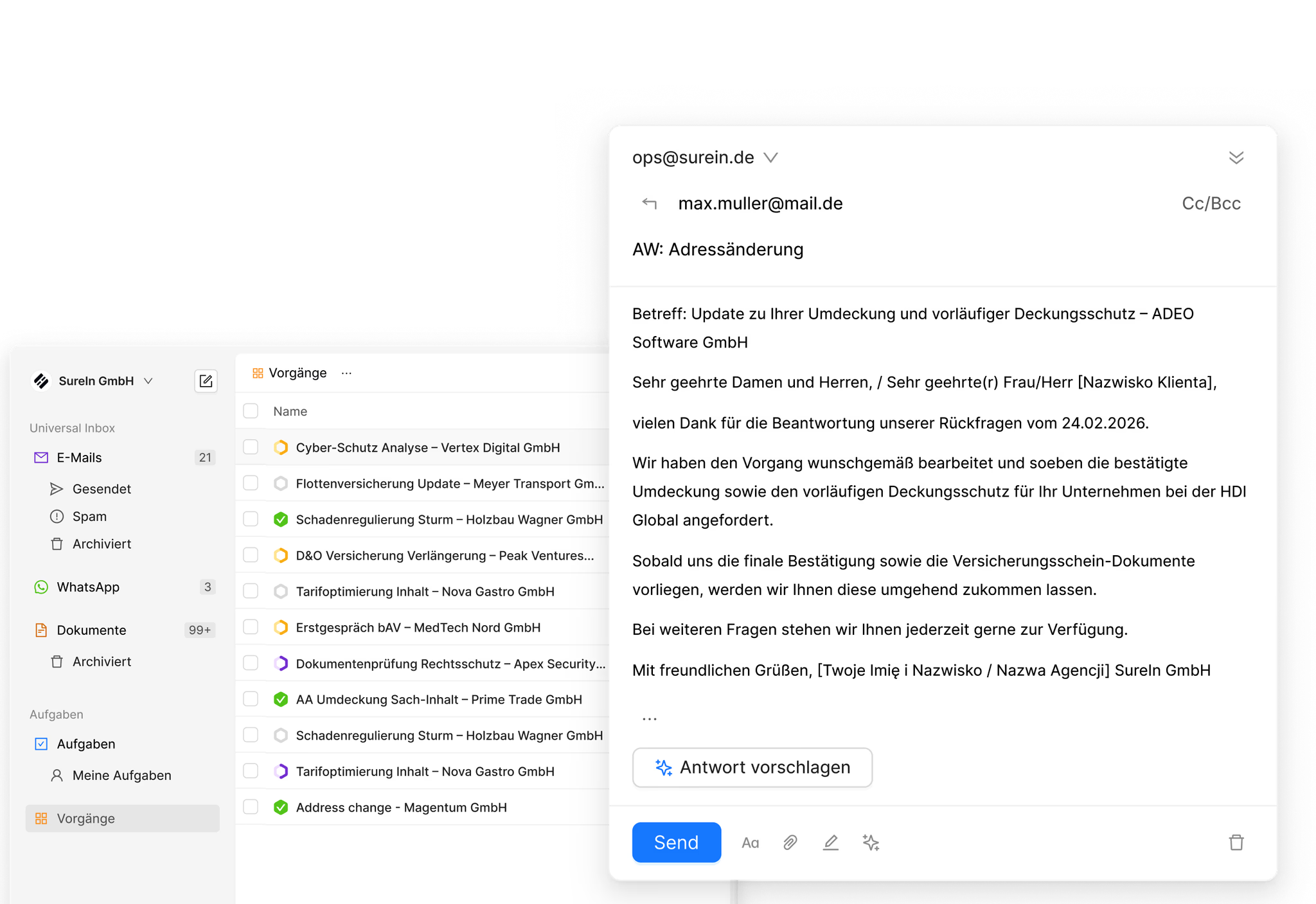
Transferred to a brokerage, it looks like this. The inputs are incoming emails, WhatsApp messages, BiPRO documents, phone notes and appointments. The operating system takes all of it in, recognises what it's about, and turns it into a structured case with ownership, priority and a traceable trail. It coordinates what otherwise lies scattered across individual inboxes, folders and heads.
The difference from a single tool is the same as between an app and the operating system beneath it. The app handles one task. The operating system makes sure all tasks come together. A brokerage running five apps without a shared layer has five apps. It doesn't yet have a system.
What an operating system is not: not a management system, not a CRM, not a single tool
For the term to hold up, it has to be set apart from what's already there.
The broker management system (MVP) is the system of record. It's the central repository for clients, policies, documents and commissions. It's the reliable source of truth about your portfolio, and that's exactly what it's built for. A management system stores data very well. But by its nature it's passive: it records what was and doesn't move a case forward on its own.
An example: a claims notification comes in by email. The broker management system can document the claim cleanly, once someone enters it there. But it doesn't open the email, doesn't recognise on its own that it's a claim, and doesn't create the case. That first, decisive step is, to this day, done by a human.
A CRM manages relationships and sales. It knows whom you spoke to and when and which opportunity sits in the pipeline. That too is valuable, but it's a different task from the operational handling of incoming cases.
A single tool, finally, solves exactly one problem. A comparison calculator calculates, a document scanner reads out, a chatbot answers. Useful, but each an island in itself.
An operating system is none of these three. Nor does it replace them. It lays itself on top and connects them into a flow. The management system, CRM and tools stay where they are. The operating system is the layer that ensures work no longer has to be carried by hand between them.
The idea behind it: from system of record to system of action
The thought isn't new, it has a clear lineage. In 2011, technology thinker Geoffrey Moore coined the distinction between a system of record and a system of engagement. The system of record holds transactions and creates a reliable data foundation. The system of engagement lays itself on top and makes the people who work with it daily productive. Moore's point was explicitly not a replacement, but a complement to the existing investment.
This lineage continues. Greylock investor Jerry Chen later described the system of intelligence, a layer that takes in data from multiple sources, evaluates it and acts on that basis. And in 2026, Andreessen Horowitz draws the conclusion: with AI, the system of action emerges, a layer that translates intent into execution, orchestrates multi-step work across tools, and sits above the systems of record without replacing them. Three stages, one common thread: first record, then support, then execute.
That's exactly what an operating system for insurance brokers is. It's the system of action for the brokerage. It turns the passive repository into an active flow.
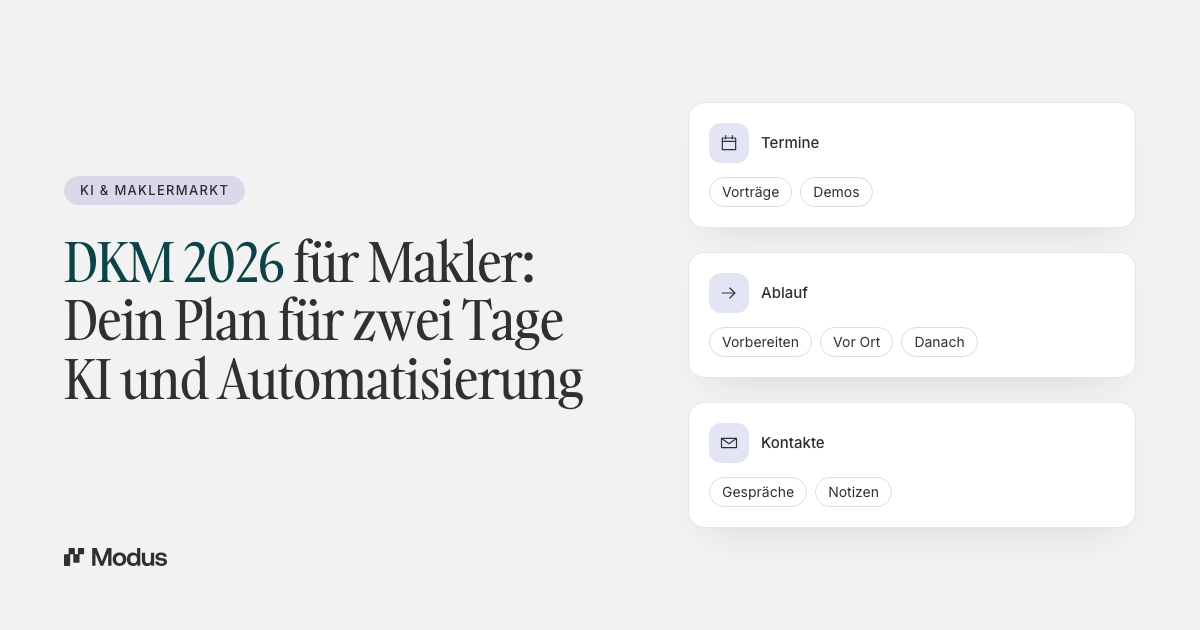
What a broker operating system consists of
Just as a technical operating system consists of several layers, the operational layer too has clearly nameable components.
- A universal inbox. All channels come together in one place: email, WhatsApp, BiPRO documents, phone, appointments. In the typical brokerage, these channels today sit in five to seven separate tools: Outlook, WhatsApp Web, the BiPRO portal, the comparison calculator, the CRM, the claims tool and the broker management system. Every jump between them costs time, context and attention. An operating system bundles them into one intake instead of adding them up.
- Structuring into cases. Every incoming message becomes a case with a type, ownership and priority. Intake becomes a task, not a pile.
- Context per case. The system summarises what it's about and links the case with the portfolio, history and related cases. The context is right there, instead of being laboriously gathered together.
- Traceability. Every step leaves a trail on a timeline. Who decided what and when stays auditable.
- Execution with sign-off. The system prepares replies and next steps, the human reviews and approves. Summarise, structure, execute.
None of these layers is a separate product you buy on its own. They're the components of one layer, just as memory management and the file system are components of an operating system and don't sit on the shelf individually. Only in interplay do they add up to what noticeably changes the working day in the brokerage: an intake that orders itself, instead of having to be sorted.
Why this is decisive operationally and economically
The practical difference shows in the daily routine. Without an operational layer, work lives in individual inboxes. Every case hangs on the person who happened to open it. If that person goes on holiday, the context goes with them. With an operational layer, work lives in the system. Nothing slips through, because every case is visible, assigned and prioritised. The broker's role shifts from executing to reviewing and deciding.
Economically, the centre of gravity shifts with it. When the real work no longer lies in storing but in execution, that's also where the lever lies. The insurers show where things are heading. According to the GDV, the straight-through-processing rate has risen significantly of late; in health insurance almost a third of processes run fully automated. At the same time, one insurance policy in five is taken out digitally. The value creation is migrating into end-to-end handling. The brokerage whose back office still runs through human inboxes is the bottleneck in an otherwise digital chain. That this bottleneck isn't a marginal topic but concerns the business model itself is shown in the article on how the insurance broker's business model is changing through AI.
Concretely, the difference means: instead of forty-seven unsorted messages waiting for one person on Monday morning, forty-seven structured cases are ready, prioritised and assigned. The same amount of work, a completely different starting point.
That's exactly where operational leverage emerges. Not through more staff, but through a layer that carries more cases per head. Why more revenue per employee and not more headcount is the decisive metric hangs directly on this.
How an operating system coexists with your systems
The most common worry is: do I then have to replace my broker management system? No. An operating system is only as good as the data foundation beneath it, and that foundation is your management system.
The connection runs through interfaces that have existed for a long time. The Brancheninitiative Prozessoptimierung (BiPRO) has set standards for this. With the BiPRO 430 standard, for example, documents and data from the insurers land directly in the broker management system, instead of being pulled individually out of each extranet. An operating system reads out this layer and builds on it. It takes nothing away from the broker management system, it makes its data usable.
This creates a clear division of roles. The management system stays the source of truth about the portfolio. Outlook stays the email client. The operating system is the layer in between and above, which turns intake into structured execution.
More flexibility, less lock-in
This separation also creates room to move that classic broker management systems alone don't offer. Because the operating system reads and writes via standardised interfaces, it isn't tied to a single portfolio system. Connecting several broker management systems in parallel is possible, for example when a merger brings two management systems together or a pool prescribes a different system than your own office. A later switch of the portfolio system also becomes easier, because the operational logic and the portfolio data are maintained independently of each other.
For brokerages that shy away from switching their broker management system today because the lock-in sits too deep, this is a central difference. The portfolio system isn't replaced, but it becomes more portable. Anyone who decides tomorrow on a different provider doesn't lose the case logic on which the daily business runs. The operational layer travels with you, and the cases the office handles every day stay where they belong: above the repository.
This logic of structure and execution is also described in the article on why automation without structure is dangerous in insurance, and it's the reason why an AI feature is something different from an AI infrastructure.
Frequently asked questions
What is meant by an operating system?
An operating system coordinates a machine. It manages resources, orders inputs and provides the shared services on which all programs run. Transferred to a brokerage, an operating system means the operational layer that takes in incoming communication, turns it into structured cases and coordinates the flow, instead of handling individual tasks in isolation.
What is the difference between a broker management system and an operating system?
A broker management system is a system of record. It stores clients, policies, documents and commissions reliably, but stays passive. An operating system is a system of action. It takes in incoming cases, structures them and drives them forward to a prepared reply. The one holds data, the other moves work. They complement each other, with the operating system sitting above the broker management system.
What is the difference between a CRM and a broker management system?
A CRM manages client relationships and the sales process, that is, contacts, conversations and sales opportunities. A broker management system manages the portfolio, that is, policies, documents and billing. In the brokerage the two overlap in places, but they fulfil different tasks. An operating system lays itself over both and connects their data into a flow.
Does an operating system replace my broker management system?
No. An operating system depends on the broker management system's data and builds on it. It reads along via interfaces like BiPRO, structures the cases and executes them. The broker management system stays the source of truth about the portfolio. The two layers don't replace each other, they complement each other.
Can an operating system connect several broker management systems in parallel?
Yes. Because an operating system works via standardised interfaces like BiPRO, it isn't tied to a single broker management system. Connecting several portfolio systems in parallel is possible, as is a later switch. That lowers the classic management-system lock-in and makes the portfolio more portable, without touching it.
What is a workflow platform and is that the same thing?
A workflow platform automates defined processes. An operating system goes further: it generates the cases in the first place out of incoming communication, orders them and then executes them. Workflow automation is one part of it, but not the whole. What matters is that work doesn't just get worked through but arises in a structured way.
Does a small brokerage even need something like this?
A small office in particular benefits, because it feels every hour in administration especially keenly. An operating system isn't worthwhile from a certain size, but from the point at which the inbox defines the day. It doesn't replace additional staff, but makes the existing team more capable in handling.
Is an operating system the same as AI in the brokerage?
No, but they're connected. AI is the technology that makes structuring and preparing cases possible. The operating system is the layer on which this AI works in operation, with ownership, priority and traceability. AI without this layer stays a single feature. The layer without AI would stay a pure repository.
Conclusion
Operating system is a big word, and its inflationary use has worn it out. But behind it stands a clear idea. An operating system for insurance brokers isn't the next tool and isn't the replacement for your broker management system. It's the operational layer that turns incoming communication into structured execution and connects the systems that today sit side by side.
The broker management system holds the portfolio. The operating system moves the work. Anyone who understands this difference makes the software decisions of the coming years on a different footing.
Scale revenue. Not headcount.
Don't miss any developments in AI for insurance brokers. Sign up for updates now.